
6 x 50 minutes
GDHR Topics
Learning objective

A one term respectful relationship program consisting of 8 scaffolded sessions covering - creating a group agreement, assessing prior knowledge, gender stereotypes and impacts on relationships, sexual consent, unethical behaviours in relationships and managing conflict, and values.
Each stage can be delivered in isolation but is best delivered sequentially.
Stage 3 is suggested for Year 9 but may be suitable for lower or higher year groups depending on student demographics.
Take home messages
Curriculum links
Sub-strand: Personal identity and change
- Factors that shape personal identities and adolescent health behaviours
Sub-strand: Staying safe
- Skills to deal with challenging or unsafe situations:
• refusal skills
• initiating contingency plans
• acting assertively - Actions and strategies to enhance health and wellbeing in a range of environments
- Strategies are examined, such as communicating choices, seeking, giving and denying consent, and expressing opinions and needs that can support the development of respectful relationships, including sexual relationships
Sub-strand: Healthy and active communities
- Impact of external influences on the ability of adolescents to make safe and informed choices relating to:
• sexual health behaviours
• alcohol, drugs or other harmful substance use
• risk-taking - Implications of attitudes and behaviours on individuals and the community
Sub-strand: Interacting with others
- Characteristics of respectful relationships and how these can prevent violence and abuse
- Managing emotional responses and resolving conflict in family or social situations
International technical guidance on sexuality education
Key concept 3.1 (12–15-year-olds):
Gender roles and gender norms influence people’s lives.
Romantic relationships can be negatively affected by gender roles and gender stereotypes.
Key concept 3.3 (12–15-year-olds):
- All forms of GBV by adults, young people and people in positions of authority are a violation of human rights.
Key concept 4.1 (12–15-year-olds):
- Sexual abuse, sexual assault, intimate partner violence and bullying are a violation of human rights.
Key concept 4.2 (12–15-year-olds):
- Everyone has the right to be in control of what they will and will not do sexually, and should actively communicate and recognize consent from their partners.
Key concept 5.2 (12–15-year-olds):
- The process of making decisions about sexual behaviour includes consideration of all positive and negative potential consequences.
- There are factors that can make it difficult to make rational decisions about sexual behaviour.
Key concept 7.2 (12–15-year-olds):
- It is important to be able to make informed decisions about sexual behaviour.
Materials
- See RELATE Stage 3 for full program including lists of materials required for each session. Please note, the video link for session 4 and 5 is no longer in use.
Before you get started
- Teachers should know and understand the protective interrupting technique and what, why, when and how it is needed and used before facilitating this activity. It is important that teachers are familiar with the Dealing with disclosures Guide and have a risk management strategy in place.
- Refer to the Guides: Adolescent relationships, Gender stereotypes and expectations and Respectful relationships for further content information related to this activity.
- Be wary of couples who are in the room and consider use of grouping strategies to split them up to avoid potential conflict.
- Provide students with a copy of Relationships, Sex and Other Stuff to take home and read and discuss with their family.
Learning activities
RELATE Program
8 x lessons
See RELATE: Stage 3 full program (16MB)) for the entire package of lesson plans including lists of materials required for each session, posters, activity sheets and teaching notes.
Please note important information for some lessons. Lesson 1, 6, 7 and 8 still contain some useful activities that are not covered in other Year 9 lessons. Lesson 2 and 3 which cover topics of gender and consent may be considered outdated and lack gender diversity. Lesson 4 and 5 relate to a video that is no longer accessible.
Sexual Health Quarters (SHQ) conducted the research and original development of RELATE (1st and 2nd edition). SHQ has had no involvement with any subsequent updates or editions of RELATE.
Health promoting schools
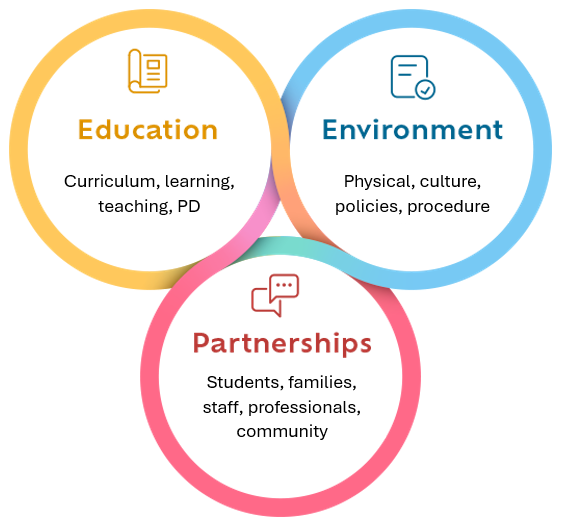
Background teacher note: Health promoting schools framework.
Partnerships
Education
- Make use of SHQ library for resources
- Plan whole school subject focus
- Presentation by students on sexual health information for student and parent information
- Show links between religious education and relationships education
Environment
- Professional development for staff
- Set up a health ‘hang out’ room – displaying health messages
- Personalised directory of services as relevant for each local area
Family & Community
- Talk Soon. Talk Often: a guide for parents talking to their kids about sex is a free hardcopy resource that can be bulk ordered by schools and website. Send a copy home to parents prior to starting your RSE program. The booklet offers ages and stage related information on puberty (and other topics) so that parents can reinforce the topics covered in class. (How to order hard copies.) Provide the link to parents on school websites and social media.
- Run a parent workshop and run this activity with parents to model the content that will be covered in your RSE program.
- Run a parent and child evening session, where the children can teach the parents what they have been learning about.
- Parent survey on current relationships and sexuality knowledge with attached invitation to parent session.
- Add useful websites to school newsletters or to school/class webpages.