
Learning objective
Students consider the impact of alcohol and other drugs on decision making. Students discuss the options and make informed choices to help themselves or a friend stay safe.
Take home messages
Curriculum links
WA HPE Curriculum
HPE: Healthy and active communities
Impact of external influences on the ability of adolescents to make safe and informed choices relating to:
• sexual health behaviours
• alcohol, drugs or other harmful substance use
• risk-taking
International technical guidance on sexuality education
Key concept 6.4 (12-15 year olds)
Friends can influence one another positively and negatively
Materials
Before you get started
- Be aware students may stories of themselves or others drinking alcohol and taking drugs, consider how to best address these conversations.
- Young people need time and the opportunity to explore their own beliefs and values about these issues in a safe, supportive learning environment. When using this resource it is essential that facilitators are aware of creating a safe environment and consider issues of disclosure, diversity, discrimination and confidentiality.
- Alcohol and other drugs remain predominant in youth culture today. It is important for young people to learn to be responsible when experimenting with alcohol and other drugs, and avoiding sexual intercourse and other risk-taking behaviours while under the influence. Refer to the Alcohol, other drugs and sex Guide for further details.
- It is possible that a student has been involved in a traumatic experience relating to alcohol and other drugs and sex. It is important that teachers are familiar with the Guide: Managing disclosures and have a risk management strategy in place.
Learning activities
Group agreement
5 mins
Teaching tip: A group agreement must be established before any Relationships and Sexuality Education (RSE) program begins to ensure a safe learning environment. Read Essential Tool: Establishing a group agreement for tips on how to create one and what to include.
- Revise or create the class group agreement.
How do drugs and alcohol impact us?
20 min
- Use the teaching strategy think-pair-share to identify reasons why young people choose to use or not use drugs.
Teaching tip: Be prepared for many positive reasons that people use alcohol and other drugs, including young people, and how you can respond or reframe these messages.
- Print off a copy of the 4 Ls worksheet and either give one per student or ask them to work in pairs/small groups to complete each section on how excessive alcohol and other drugs use may have long-term impacts on someone's life. Ask students to share some of their ideas for each section so the whole class can gather a comprehensive picture the impact drugs and alcohol can have on someone's life.
Ask:
Does alcohol and drug have mostly positive or mostly negative impacts on someone's long-term health?
(Mostly negative)
Say:
"We can see alcohol and other drug use can have really negative impacts on all aspects of our lives. The 4 Ls look at more long term deeper impacts, which is important to consider. But there are also more immediate impacts alcohol and other drugs can have.
Ask:
How can alcohol and other drugs affect our mood when we are currently under the influence/drunk/high?
(Good, happy, goofy, low, sad, crazy, hyper, relaxed, chill)
How can alcohol and other drugs affect our mood the day after we take them?
(Low, hung-over, tired, brain-dead)
When someone drunk or has been taking drugs, how does that affect their decision making?
(More likely to do things they wouldn't normally, make silly decisions, follow directions from others, harder for them to say no)
How can alcohol and other drugs affect our perception of risk?
(Don't see the risks, think nothing will go wrong)
What are some unsafe things young people might do when they are in a relaxed mood, have poor decision making and have a reduced perception of risk?
What are some of the implications of having intoxicated sex?
Can these implications be long term as well as short term?
- Discuss informed decision-making skills (e.g. weigh up pros and cons, take time, get advice, consider feelings of self and others) and take suggestions from students. Discuss instincts and feelings that may be experienced which raise awareness that a decision may have a negative or positive consequence. Consider physical feelings and how decisions can be made by following head, heart or gut instincts. Stress that considering all three instincts can result in making the safest decisions.
- Start the DVD. Be ready to stop, start and choose menu options throughout the 30-minute film.
Placemat decision-making: Sex and drugs
20 min
This activity involves watching Kaiyai Girl. While watching the DVD, students are prompted to make choices for the main character regarding sex and drugs and discuss their personal perspectives on the issues raised.
- Provide each small group with five copies of the Placemat template (one for each decision point) or have students draw their own placemat depending on the number of students in the group.
- Use the placemat strategy for each decision point in the DVD:
- Allow the students 2 minutes to independently identify and write their decision in their section of the placemat.
- Have each group discuss their individual choices and decide on a group consensus, to be written in the middle section of the placemat.
- Identify a choice to select on the DVD through a whole class consensus.
3-2-1 Reflection
- Ask students to provide a summary of Missy’s journey from Kaiyai Girl and the choices and consequences she encountered and then provide an alternative safer choice she could have made at each stage.
- Students can role-play the alternative choices.
- Revisit informed decision-making skills and discuss possible challenges with implementing safer choices in a range of scenarios.
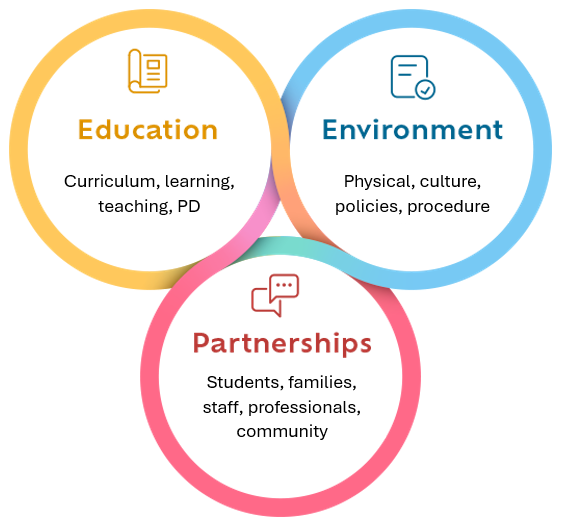
Health promoting schools
Background teacher note: Health promoting schools framework.
Education
Curriculum and teaching
- View SDERA's Challenges and Choices program for lesson plans and assessment tasks related to drug and alcohol.
Partnerships
Family
- Talk Soon. Talk Often: a guide for parents talking to their kids about sex is a free hardcopy resource that can be bulk ordered by schools and website. Send a copy home to parents prior to starting your RSE program. The booklet offers ages and stage related information on puberty (and other topics) so that parents can reinforce the topics covered in class. (How to order hard copies.) Provide the link to parents on school websites and social media.
- Run a parent workshop and run this activity with parents to model the content that will be covered in your RSE program.
- Run a parent and child evening session, where the children can teach the parents what they have been learning about.